Introduction
Shopping for window treatments can feel more like a lot of work. For one, the sheer choices available in the market can be overwhelming. But what if there was (and there is) a dependable option that meets your requirements, does a great job with minimal fuss, and looks good while pulling it off?
At first look, they seem almost too simple: a clean sheet of fabric that rolls up when light is needed and rolls down when privacy or shade is needed. Yet that simple motion somehow has a calming effect, making a room feel instantly more organised and intentional.
In recent years roller blinds have become a favourite in modern homes and workspaces. They’re pretty inconspicuous, taking a back seat to let the rest of the room express itself through decor and space. This minimalism suits compact apartments to spacious offices, and everything else in between. What’s more – depending on the fabric chosen, they can dramatically shift the atmosphere: Blackout materials turn dawn into pitch darkness, light-filtering fabrics soften harsh daylight, sunscreen options preserve the view while keeping glare at bay, and even motorised roller blinds glide with a touch or voice command.
So what makes them particularly versatile? It has to be the way the design adapts without calling attention to itself. While the mechanism is straightforward, the effect is anything but. Whether the goal is controlling natural light, creating privacy, improving room insulation, or simply achieving a cleaner aesthetic, roller blinds manage to do the job quietly and efficiently.
With this guide you’ll have a grasp of the essentials of roller blinds: how they work, how fabrics can impact how they appear, the subtle benefits, and the practical considerations around installation and care. Hopefully, you will be able to make sense of a window dressing alternative that is often underestimated, yet consistently proves to be one of the most reliable and adaptable window options today.
First, what exactly are roller blinds?
Roller blinds really are the signature, “simple but effective,” solution. The holy grail of blinds.
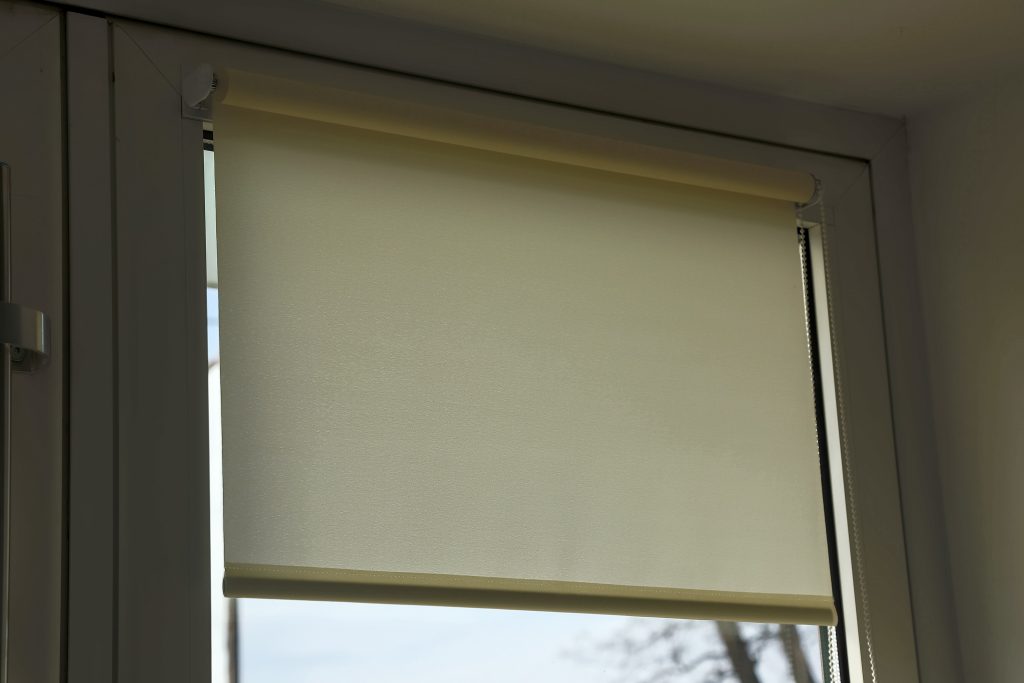
This is a great example of how the simplest designs are often the ones that work hardest. In a nutshell, this is a single sheet of fabric with a roller tube at the top with a mechanism that moves it up or down. That’s basically all there is to it.
Roller blinds are one of those things that look almost too simple at first. It is just a clean piece of fabric that rolls up or down; yet they somehow manage to solve half the problems that other window treatments create. There’s no visual clutter, nothing dangling or tilting, and nothing that needs constant adjusting. They remain in the background, doing their job without demanding attention. Isn’t that refreshing?
The idea is straightforward: a single, smooth panel of fabric wrapped around a tube fixed at the top of the window. Lower it, and the fabric stretches neatly into place. Raise it, and it disappears in one clean motion. Most people don’t think twice about how it works which, quite honestly, is part of the charm.
The roller mechanism itself can be as basic or as advanced as you need. Some prefer the familiar side-chain, while others opt for the cordless spring system which offers safety and aesthetics (fewer cords just look better). And then there are always motorised roller blinds, which feel almost indulgent. An effortless tap of the remote or a voice command, and down they glide. Easy.
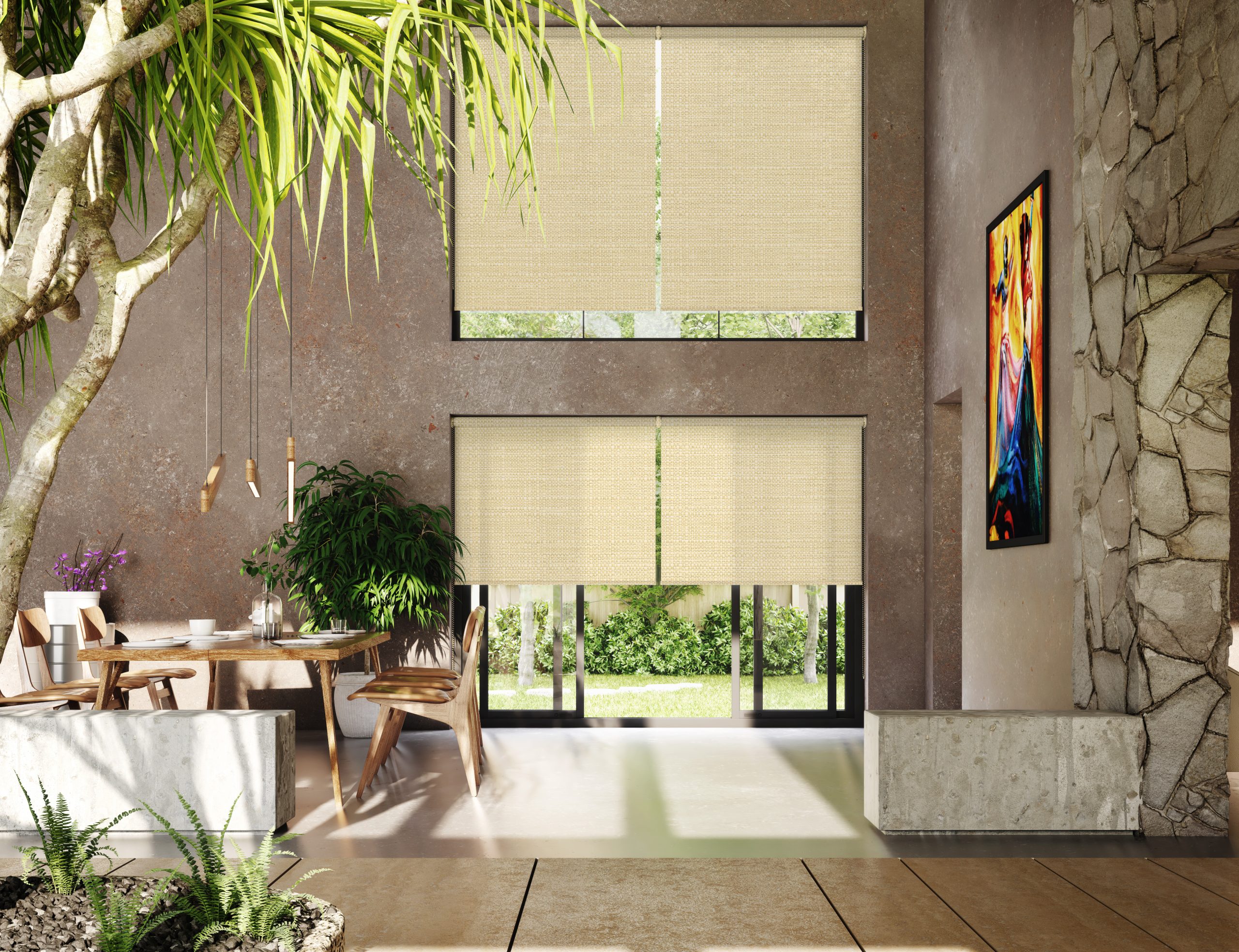
Mounting also plays a role. An inside mount fits snugly within the frame and gives the window a tidy, architectural outline. Outside mounts cover a bit more wall and block more light, which is useful when the tiniest sliver of morning sun feels like an alarm clock. Some setups hide the roller in a slim cassette; others leave it exposed, giving the room a slightly industrial edge.
And, despite looking similar at first glance, roller blinds actually come in a handful of distinct personalities, each meant for a different kind of light and lifestyle:
- Standard roller blinds, the everyday option, they’re straightforward, uncomplicated, and ideal when the goal is just basic light control without overthinking it.
- Blackout roller blinds, the heavy-duty option. Perfect for bedrooms, nurseries, media rooms, or anywhere darkness is a feature, not a flaw.
- Sunscreen roller blinds behave almost like sunglasses for the window. They cut down glare and block UV rays but still let you see outside.
- Thermal roller blinds are the practical ones designed to help the room stay cooler in summer and warmer in winter, quietly saving energy without making a big deal out of it.
Over time, roller blinds have evolved to accommodate different needs. There are dual-roller systems which pair two fabrics. Imagine a sheer for the day and a blackout for the night, combined in a single neat setup. All flexibility, zero fuss.
Fabric materials and options
It’s easy to assume fabric is just, well, fabric. But when you hold up different samples against the light it becomes obvious how dramatically they can shape the room. Some soften daylight while others shut it down entirely. They can control a whole mood. Let’s look at some options available.
Blackout fabrics are dense, purposeful, and almost theatrical in the way they block light completely. They can make a bedroom feel like midnight even when the sun is being pushy otherwise. Also available are room-darkening materials, which are gentler and less “total blackout,” and more “reduce the brightness.” These are useful in rooms where you’d like some daylight but not aggressively so.
Then there are light-filtering and sheer fabrics, which make a room glow instead of glare. These are the blinds that keep a space bright without the harshness, making them ideal for living areas, work corners, and places where you want to feel the day, but not intrusively.
Performance, though, is where things get interesting.
Some fabrics come with UV protection, which prevent furniture and furnishings from fading. Then there are thermal coated fabrics which cut down heat in the summer and can keep spaces insulated in the cold. Wet spaces like kitchens and bathrooms call for moisture-resistant materials because humidity, as we know, has a way of testing our patience. For offices and public spaces, consider fire-retardant fabrics which tick the safety boxes without looking overly clinical.
What are these fabrics made of, you ask? Well, polyester is the go-to option because it’s low-maintenance, keeps its shape and is easy to clean. Natural blends for e.g. cotton-linen blends offer earthy texture for rooms that might otherwise feel too sleek and fabricated. And then there are Vinyl and PVC options that are best in moisture-rich spaces.
As for aesthetics, there is a panoply of shades. Imagine variations of white that behave differently depending on the hour. Soft greys, warm taupes, and charcoal grey-blacks. Patterns both muted and lively. You can even choose how the bottom of the blinds look—straight and simple, gently scalloped, or shapes that add a hint of unique personality.
This being said, we understand that choosing fabric isn’t a technical decision as much as it is an emotional one. It’s about the kind of light a room is best suited for, the privacy it needs, and the comfort it should offer you. And once the fabric feels right, the rest of it all falls into place.
Benefits and advantages of roller blinds
What is somewhat a relief is that roller blinds don’t compete with the furniture, they don’t overwhelm the windows, and don’t ask for much in terms of upkeep. One of their biggest strengths is quite simply, their reliability. Forget about slats that twist out of shape, annoying cords that dangle and tangle into knots, and no flimsy panels that sway every time someone walks past. Basic structure = fewer headaches later. Roller blinds go up, go down, and they don’t question the assignment.
Another reason why they’re a great choice is how practical they are in small spaces. If you’ve ever wrestled with bulky drapes, you know how much visual weight fabric can carry. Think about that for a second. In contrast, roller blinds sit cheek by jowl to the window, almost like a second skin. When they’re raised, they practically disappear. When they’re down, they form clean lines that make the room look neater, unfussed, and more organised.
Light control is another advantage, and not just in the on/off sense. You can stop roller blinds exactly where the light feels right to you. Need to soften the glare on a laptop? Lower it halfway. Want the room to glow but not blind you? About ⅓ of the way is good. It’s this quiet precision that makes roller blinds feel like a natural part of your space, compared to its alternatives.
Then there’s also the factor many people don’t always think about when it comes to blinds: energy efficiency. As mentioned earlier, roller blinds come in a range of thermal fabrics too, which add a layer of insulation that helps stabilise temperatures. Remember to thank yourself on noticeably hot afternoons or chilly evenings. Sunscreen fabrics cut down heat without shutting out the light. And by managing natural light better, artificial lighting isn’t needed quite as often, which, although marginal,can add up to a meaningful saving over time.
It’s time we talked about maintenance. It’ll be short. All roller blinds need are a quick dusting, a gentle wipe, and they’re good to go. No weekend-long laundering. No remove and rehang drama. They age well, don’t trap much dust, and don’t require special detergents or elaborate cleaning rituals.
Are they dramatic or decorative? Probably not. But isn’t that what you want for your blinds? Roller blinds work so well exactly because they are so simple and so effective. They blend in so the rest of the room can breathe, quietly elevating the comfort level without being noticed. That’s the essence of sophisticated living, and the result of having made the better choice.
Also Read: Window Roller Blinds for Home to Enhance Modern Living