Overview Summary
This blog explains honeycomb blinds, highlighting their structure, types, benefits, and installation process. It covers options like fabric honeycomb blinds and motorised honeycomb blinds, along with their suitability for different spaces. The guide discusses honeycomb blinds’ pros and cons, energy efficiency, and noise reduction features. It also explains the cost of honeycomb blinds and answers how much honeycomb blinds cost based on customisation. Additionally, it outlines steps for installing honeycomb blinds and provides insights into honeycomb blinds manufacturers, helping readers choose the right window solution.
Introduction
Modern window treatments are evolving rapidly, and honeycomb blinds have become a popular choice for homeowners seeking energy efficiency, style and comfort.
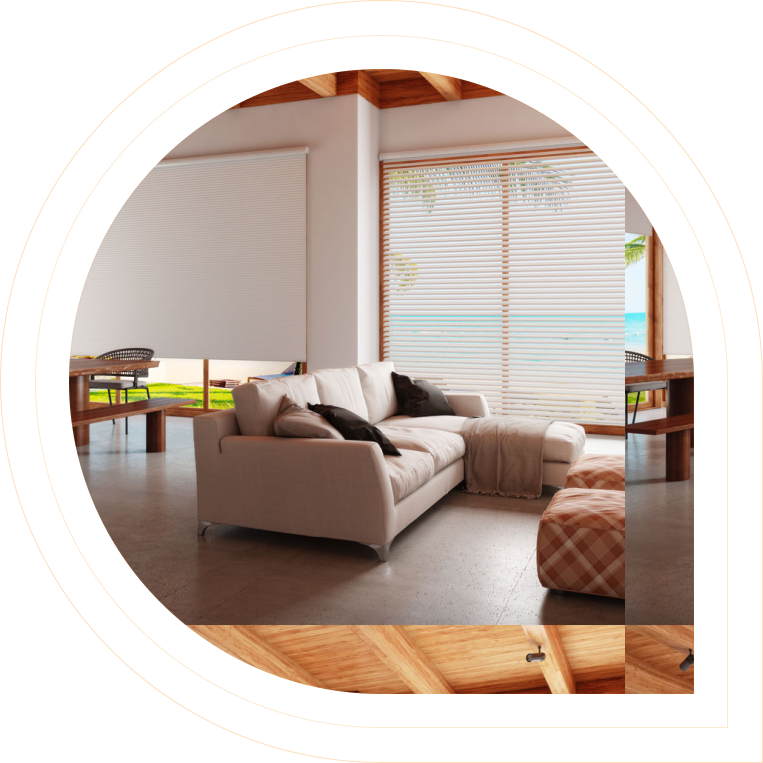
Designed with a unique cellular structure, these blinds trap air within their layers, offering insulation and noise reduction. Today, honeycomb blinds for windows are widely used in homes and offices due to their versatility and modern appeal.
From fabric honeycomb blinds to motorized honeycomb blinds, the options available cater to different needs and budgets. As energy costs rise and sustainability becomes more important, understanding the benefits, pricing and installation process of honeycomb blinds is essential.
What Are Honeycomb Blinds?
Honeycomb blinds feature an innovative cellular structure with air pockets that help provide insulation, sound dampening and comfort.
Their structure involves:
- Honeycomb-shaped cells with trapped air pockets
- Built-in thermal insulation
- Compact stacking design
- Options in single, double or triple-cell structures
Honeycomb blinds are used in homes, offices and commercial spaces for both functional and decorative value.
Types of Honeycomb Blinds
There are different designs for shades based on the function, the fabric, and the methods used.
Standard Honeycomb Blinds
- Single-layer adjustable cell structure
- Widely used in homes due to affordability and ease of use
- Everyday use in bedrooms and living areas
Motorised Honeycomb Blinds
- Operated via remote or smart home systems
- Convenient for large or hard-to-reach windows
- Helps create an automated, modern home
- Works with voice commands
Fabric Honeycomb Blinds
- Available in a range of textures and levels of opacity
- Light-filtering to opaque to sheer
- Functional and beautiful.
- Helps with managing light and privacy
Benefits of Honeycomb Blinds
They combine the benefit of modern designs with specifics to use more strategically in home design.
Energy Efficiency
Honeycomb blinds greatly boost energy efficiency by using a reliable cellular system to capture and insulate air. Honeycomb blinds help preserve the temperature in any part of the building and stop the temperature from escaping in the winter. It also helps regulate temperature in the summertime. Energy costs could also be reduced.
Insulation Performance
Honeycomb window blinds’ unique layered design helps to capture and cushion air pockets to insulate and minimise the effects of external temperature. It helps minimise the use of a home’s heating and cooling systems. This insulation also helps to make a home a greener option. It helps provide year-round comfort to all occupants.
Noise Reduction
Honeycomb blinds help dampen noise with their design. They use a delightful cellular structure that also absorbs sound. This helps to make a more delightful living space.
Sound Absorption
Honeycomb blinds for windows have unique air pockets that help to soundproof. This helps to reduce internal noise levels. This feature also helps to suppress echo within a room. This applies to living rooms, bedrooms, and many different office settings.
Light Control and Privacy
Honeycomb blinds also help to enhance and regulate light and privacy. They offer a wide range of materials from sheer to blackout fabrics that help to customise the levels of light while providing privacy. This helps to make them fit for any room and any use.
Adjustable Light Filtering
With fabric honeycomb blinds, users can select the combination of fabrics where glare is blocked, but good, even diffusion of daylight can be achieved. So, it won’t be completely dark, but as pleasant as even saturation, which is useful in workrooms, and great for rooms where you spend leisure time.
Space-Saving Design
Honeycomb blinds are designed to be compact and efficient, making them perfect for modern interiors where space optimisation is important. Their ability to stack them neater when raised is indicative of the orderly and neat appearance, as the obstruction is minimal.
Compact Structure
The slim profile of honeycomb window blinds allows the folds to be really tight when raised, thus the unobstructed sightline of the windows is achieved. That is perfect even in small rooms. Also, making the room appearance organized and clutter-free is a priority.
Honeycomb Blinds Pros and Cons
Before choosing honeycomb blinds, it helps to compare advantages and limitations.
| Pros | Cons |
| Excellent insulation | Higher upfront cost |
| Energy savings | Cleaning may need extra care |
| Noise reduction | Less directional light control |
| Sleek compact design | Soft fabrics require gentle handling |
| Wide design options | Premium models cost more |
Quick Take
Honeycomb blinds often justify their higher price through energy savings, comfort and performance.
How Much Do Honeycomb Blinds Cost?
Cost may change with size, materials and possibly featured materials.
Factors Affecting Cost
Window Size
Window size significantly affects the overall cost, as larger windows require more material, wider components, and stronger support systems. Bigger blinds may also involve a more complex installation. Custom or unusually shaped windows can further increase costs due to additional design, measurement, and manufacturing requirements.
Fabric and Cell Structure
The fabric quality and cell structure play a crucial role in pricing. Basic materials are more affordable, while premium fabrics like blackout or thermal options are costlier. Double or triple-cell designs enhance insulation and durability, but they require more material and advanced construction, increasing the overall expense.
Motorisation and Automation
Motorisation adds convenience but also increases cost. Each automated blind requires a motor, control system, and possible smart home integration. The more windows you automate, the higher the overall investment. Advanced features like remote access or voice control further raise costs while improving functionality.
Customisation and Brand
Customisation and brand choice greatly influence pricing. Made-to-measure blinds require precise production and tailored designs, which add to costs. Established brands often charge more due to better quality, durability, and design innovation. Additional customisation options like colours, textures, and finishes further increase the final price.
Installing Honeycomb Blinds Steps
A simple and dedicated system for efficient function and fit.
- A precise measurement system for window dimensions
- Mounting brackets can fit inside or outside a window frame
- The coordinator cuts the head of the blinds to fit the opening
- Blind operation can be altered and fine-tuned to a precise degree
Applications Of Honeycomb Blinds for Windows
An excellent and flexible solution for all window spaces and all the spaces of the home.
- Bedrooms for complete darkness and privacy
- Living spaces to filter out excess light
- Offices for comfort and reduced noise
- Large windows for energy efficiency
Manufacturing and Industry Insights
The increased demand has spurred many innovations across the world.
- Honeycomb blinds manufacturers focus on energy-efficient designs
- Increasing demand for smart and automated blinds
- Use of eco-friendly and durable materials
- Expansion in both residential and commercial markets
Why Choose Adorn Honeycomb Blinds
Choosing the right honeycomb blinds is not just about product features, but also quality and craftsmanship.
Adorn offers premium honeycomb blinds designed for:
- Energy efficiency
- Smart functionality
- Tailored customisation
- Modern aesthetics
- Durable performance
Our honeycomb window blinds combine design and performance for contemporary spaces.
Also Read: A Guide to Maximizing Energy Efficiency with Cellular Blinds
Conclusion
Finally, honeycomb blinds integrate utility, energy economy, and contemporary aesthetics seamlessly. Their structure excels in thermal, acoustic, and light control, and they are highly desirable for contemporary spaces. Although the initial honeycomb blinds price might be steep, the savings and comfort projected long term justify the investment. From fabric honeycomb blinds to motorised honeycomb blinds, there are solutions for every preference and lifestyle.
The knowledge of the honeycomb blinds’ pros and cons allows for educated purchases. Thanks to the ongoing demand and innovation, honeycomb blinds manufacturers offer updated quality and diverse customisation, ensuring this category of blinds is the go-to for modern window treatment solutions.