If you’ve ever stood in a room with an overhead skylight, you already know the charm it brings. It’s almost like the ceiling takes a deep breath and lets the whole room exhale with it. A stream of sunshine drifts in and suddenly the space feels bigger, lighter, and calmer. But give it a little time and the mood shifts. The brightness gets a bit too bold, the warmth a bit too enthusiastic, and before you know it, you’re wondering why the room that felt dreamy an hour ago now feels uncomfortably warm. That’s the dichotomy of skylights: they’re beautiful, and they’re temperamental. A blessing and a small challenge rolled into one.
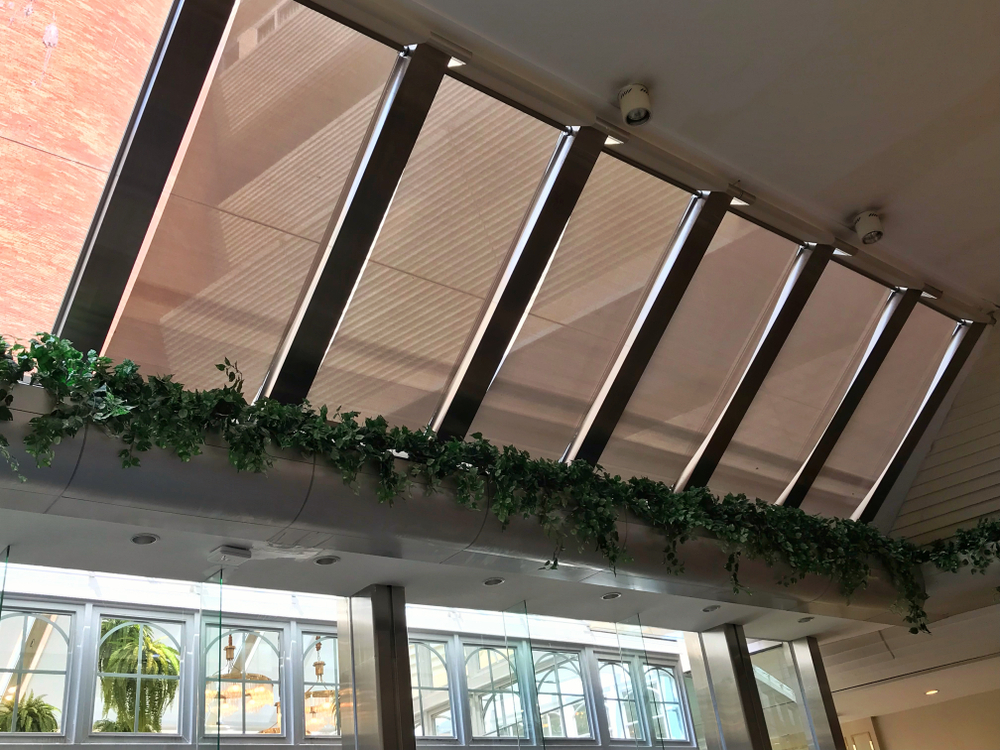
Thankfully, someone thought this through and came up with a neat solution: skylight blinds. Now, these are not your average curtains or regular blinds but made specifically for overhead spots like lofts, attic spaces, kitchens with sloped ceilings, and commercial atriums.
In recent times, skylight installations have become increasingly popular in modern homes. People want that natural light, the openness, and that edgy detailing. Suddenly you’re thinking about things you’ve never had to think about before: Which material works best? Should you go manual or choose the motorised options? And what are your choices in roof window blinds for bespoke, oddly shaped spaces?
Skylight window treatments have to tackle a very particular set of problems: harsh, direct sunlight; quick heat buildup; and the simple fact that most skylights sit completely out of reach. And that is why regular blinds just don’t work. You need fabrics that won’t fade under constant sunshine, mechanisms that work upside-down, and engineering that doesn’t sag or buckle against gravity.
It’s a unique problem to have, but we’ve got it covered (no pun intended). In this article we’ll walk you through every aspect of skylight blinds and how to dress them. Let’s figure out how to make the highlight of your home a hero.
Understanding materials for skylight blinds
Once you start looking into fabrics for skylight blinds, you’ll realise pretty quickly that this isn’t just a colour and texture choice. With roof window blinds, it is the material that manages heat, softens sunlight, repels moisture, and stays intact despite being glared at by the sun all day. Quite clearly, this is not the place to cut corners.
Let’s dive into some of the fabric types you’ll come across, their features and benefits.
Blackout fabrics: Turn daylight off! If your skylight is placed in a bedroom, an entertainment room, or any quiet nook where you like a bit of darkness on demand, blackout fabrics are the way to go. For overhead windows, blackout options also help with heat control because they form a dense barrier between the sun and your room.
Light-filtering fabrics: Now, not everyone wants total and complete darkness. For them, there are light-filtering materials which offer that sweet middle ground: soft, diffused light without the harsh glare. These are great options for kitchens, dining areas, and even stairwells where you want to keep the space bright but comfortable. The gentle glow they offer works beautifully with skylight placements.
Energy-efficient fabrics: If you’ve ever stood under a skylight on a very warm day, you’ll know how heated up it can get. Thermal fabrics to the rescue. They’re designed to insulate, which means keeping excess heat out in warm seasons, and helping retain warmth during winter. If energy efficiency matters to you (or if you simply want your air conditioner to work a little less overtime), these fabrics make a noticeable difference.
Moisture-resistant fabrics: Bathrooms and kitchens are usually the trouble spots when it comes to damp and moisture. With an overhead skylight, you’ve got a recipe for potential condensation. Moisture-resistant materials are coated to prevent mould, mildew, and warping. They hold up far better in humid environments and are easier to maintain in the long run.
Engineering integrity: at the heart of skylight blinds
Skylight window treatments, unlike regular blinds, need to work against gravity. So at the heart of great functionality and operations is engineering design.
Spring-loaded mechanisms: These systems are designed to stay in place without sagging. They use tension to hold the blind flush against the windowpane, which is especially key for angled or completely horizontal skylights.
Motorised systems: This is a lifesaver if your skylight is way out of reach. Motorised blinds operate via remote or wall switch and in many cases, can be synced with smart home systems. They’re clean, convenient, and quite honestly, worth every rupee.
Manual controls: If your skylight is reachable without acrobatics, manual options like pole-controlled blinds or cord systems work just as well. They’re simpler, budget-friendly, and still very reliable.
Track and rail systems: Skylight blinds don’t hang, they glide. Tracks or side rails keep the fabric aligned so it doesn’t droop or billow. This is crucial for curved or angled skylights where gravity constantly tries to win.
Why durability matters more than usual
Skylights attract more sunlight than any other window in the house. That means more UV exposure, more heat, and more wear and tear of hardware. When choosing materials, keep an eye out for:
- UV-resistant coatings to prevent rapid fading
- Fade-resistant dyes for long-term colour retention
- Reinforced stitching and construction to handle constant tension
- Weather-resistant parts if you’re covering an external skylight
Overhead blinds work harder than regular ones. Choosing the right materials now could mean fewer repairs later and a longer lasting, better looking skylight.
Skylight blinds vs. Traditional blinds
Skylights don’t behave like normal windows. They let in light from a completely different angle, and that changes everything. So here’s the real story of why skylight blinds aren’t just a nice-to-have, but have proved to genuinely outperform traditional blinds in every practical way.
Superior heat and light control: Sitting under a skylight feels lovely for the first 10 minutes and then suddenly you’re wiping sweat off your forehead because the sun overhead is being a little too enthusiastic.
Traditional blinds simply weren’t built to take on the overhead beam of the noon sun. Skylight blinds were.
- Serious heat reduction: Some skylight blinds can cut heat by as much as 70–78%. (Your air conditioner and energy bills will thank you.)
- Glare? Gone. If the skylight sits above a sofa, work desk, or TV, glare becomes a daily annoyance. But with the right fabric, the harsh light is diffused instantly.
- Season-friendly: Sun angles change through the year, and skylight blinds let you adapt without constantly fighting the brightness.
That’s how proper skylight shades make a world of difference.
Energy efficiency you can actually feel: Skylight blinds really earn their keep and not just through their aesthetic value, but real savings in your pocket.
- Lower cooling bills: Blocking direct overhead heat means less AC use during hot months.
- Winter insulation: Cellular or honeycomb designs trap air and act like a soft thermal wall.
- More daylight, less electricity: Light-filtering fabrics let in a soft glow, so you don’t need to switch on lights in the middle of the day.
- Consistent comfort across seasons: No more, “too hot” summers or oddly chilly wintry corners.
It’s the kind of improvement you notice not just in temperature, but on your electricity bill too.
Surprising everyday benefits: Skylights come with a few quirks you only realise after living with them for a while. That’s where skylight blinds quietly save the day:
- Privacy from above: Sounds strange until you move into a house with taller neighbours or nearby terraces. Skylight blinds will fix that instantly.
- Rain noise reduction: If your skylight is directly under a heavy monsoon cloud, the sound can feel excessive. Fabric blinds soften that noise.
- UV protection: Direct overhead UV rays can fade wooden flooring, upholstery, and furnishings. Good blinds block the worst of it.
- Adjustable ambience: Want a dark, cosy vibe for TV nights? Or a soft, diffused glow for a summery afternoon? Skylight blinds let you tune the mood like a dimmer switch.
Designed to look like they were always there
One of the nicest things about modern skylight window treatments is how clean and incidental they look. They don’t dangle awkwardly, or take up floor space, and they don’t clash with furniture.
- Space-friendly: Since they sit within the window recess, nothing sticks out.
- Architecturally neat: Clean lines blend beautifully with skylight frames.
- Atmosphere-building: A loft or attic has a neat, finished look with the right blind.
- Professional finish: Works just as well in upscale homes as in commercial spaces like cafés, atriums, and coworking offices.
Skylight blinds add polish without stealing attention. They’re subtle, thoughtful, and genuinely make spaces feel more composed.
DIY installation vs. Professional support
Let’s assume that by now, you’re sold on the idea of skylight blinds. The next question usually is, “How easy is it to install?”
Well, it depends. Some skylight setups are straightforward while others can be more complicated. But let’s break it down in a simple, no-pressure way.
When to call in the professionals
If your skylight is easy to get to (meaning, you don’t need to channel your inner mountaineer) a quick DIY job might just work. Here’s a quick checklist:
- Are you decent with basic tools (drill and a measuring tape)?
- Is the skylight regular in shape? No unusual curves, no odd angles, no “custom” surprises.
- Do you have a few hours for the first installation? (The second one is always faster.)
- Are you good with following instructions? Skylight blinds come with templates, guides, alignment steps… all very manageable if you’re patient.
If you have answered yes to all, you are very capable of a DIY installation. And yes, the savings are real, easily shaving off 50–70% of your total cost. That’s a solid incentive.
How to DIY: Just to give you a sense of what you’d be signing up for:
- Measure properly and then measure again because skylights are unforgiving.
- Position the template where the brackets need to go.
- Install the brackets (this is where your drill is needed).
- Attach the tracks or side rails, depending on your blind type.
- Fit the blind into place, adjust the mechanism, and check that it glides smoothly.
- Do a final test, open-close-open-close, just to be sure.
If reading this made you think, “yes, I can do that,” then you probably can.
When a professional is needed
There are skylights that look deceptively simple until you try installing blinds on them. You should strongly consider calling in a pro if:
- The skylight is very high up.
- The window has a unique shape like curved skylights, angled frames, or anything custom
- You’re going motorised. Electrical wiring, pairing remotes, smart home integration are definitely easier for someone trained.
- There are multiple skylights.
- It’s a commercial space. There are often building codes and warranty clauses involved.
And then there’s the peace-of-mind factor. A professional takes responsibility for measurements, alignment, safety, and overall smoothness.
Why professional installation often pays off
Aside from the obvious convenience, there are some underrated benefits:
- Safety first: They’ve got the gear (and the experience) to climb and reach safely.
- Warranty assurance: Many manufacturers insist on professional fitting to validate the warranty.
- Cleaner finish: No awkward gaps or crooked rails; everything just looks right.
- Code compliance: Especially for commercial or large skylights.
- On-the-spot troubleshooting: If the frame is slightly off or the mechanism needs tuning, they’ll solve it right there.
You’re paying for expertise and the comfort of knowing it’s done properly.
Cost realities:
- DIY costs = price of the blinds + tools (if you don’t already own them).
- Professional installation = usually 40–60% extra on top of material cost.
- Long-term value: Pro installs often come with service warranties.
- Risk cost: One wrong measurement can easily exceed the price of hiring someone.
It’s not always about saving money in the moment but also avoiding unpleasant surprises later. The upshot? In many cases DIY is very doable, but if you can afford a professional, it’s absolutely worth it.
After the initial excitement of having a skylight wears off you will realise it has a personality of its own. Bright and generous on some days and a little too intense on others. Skylight blinds help to enhance the utility and beauty of the window, so your space always feels comfortable, not unpredictable.
What you choose (blackout, light-filtering, thermal, manual, or motorised, etc.) ends up shaping how you experience the room every single day. And once you’ve felt the difference between a naked skylight and a well-fitted one, you will appreciate how the room feels calmer. The way the light feels more intentional, and even notice the temperature behaving.
As for installation, you have seen there’s no one right answer. Some people enjoy the DIY challenge while others decide that climbing ladders and wrestling with brackets is best left to someone to an expert. Choose the route that feels safe and sensible for your space and ultimately you will achieve the look you were going for.
If your skylight is the highlight of the room—and it usually is—the right blind simply helps it shine in the way you intended. A small change, but one that makes the whole room feel more complete, more right, and more you.
Also Read: Which Window Blind Is Superior? Find the Best Choice